



Functional pet food is dog or cat food formulated to support a specific health goal beyond supplying basic nutrients. That goal might be steadier digestion, skin and coat support, mobility or weight control. If you’re planning a product for your brand, the question is what the recipe can reasonably deliver when a pet eats it as directed.
A bag that says “with fish oil” and a food developed for a defined nutritional purpose can look similar on a shelf. The difference sits in the recipe, serving size and evidence behind the promised benefit. Before you put a functional claim on your pack, it helps to know what the term covers and what the food can reasonably offer.
What Is Functional Pet Food?
In pet nutrition, “functional” describes an intended benefit beyond meeting everyday nutrient needs. A review of functional foods for dogs and cats uses this idea while pointing out that pet-specific evidence is still limited. We use the term here for food developed around a defined nutritional goal, rather than as a guarantee that every pet will get the same result.
That goal doesn’t replace the food’s basic job. If you’re selling a daily meal, it still needs to provide appropriate nutrition for the species and life stage on the pack. Adult dog food and kitten food start with different requirements, even if both are positioned around digestion.
For US products, the FDA’s complete-and-balanced guidance explains the distinction. A food making that claim must satisfy an applicable AAFCO nutrient profile or pass a feeding trial using AAFCO procedures. A treat, topper or supplement usually serves a different feeding role and shouldn’t be assumed to replace the daily diet.
So a functional complete meal and a functional add-on aren’t interchangeable. Owners need to know whether they’re filling the bowl with the pet’s main food or adding a measured portion to another diet. A spoonful of topper can’t be judged in the same way as the whole daily ration.
Functional pet food also shouldn’t be confused with a therapeutic diet intended for a diagnosed condition. In the US, the FDA’s explanation of food and drug claims shows why disease-treatment and prevention language carries different requirements. A wellness goal such as normal digestive support needs a different explanation from a promise to treat bowel disease.
Once that feeding role is clear, the common functional purposes are easier to compare.
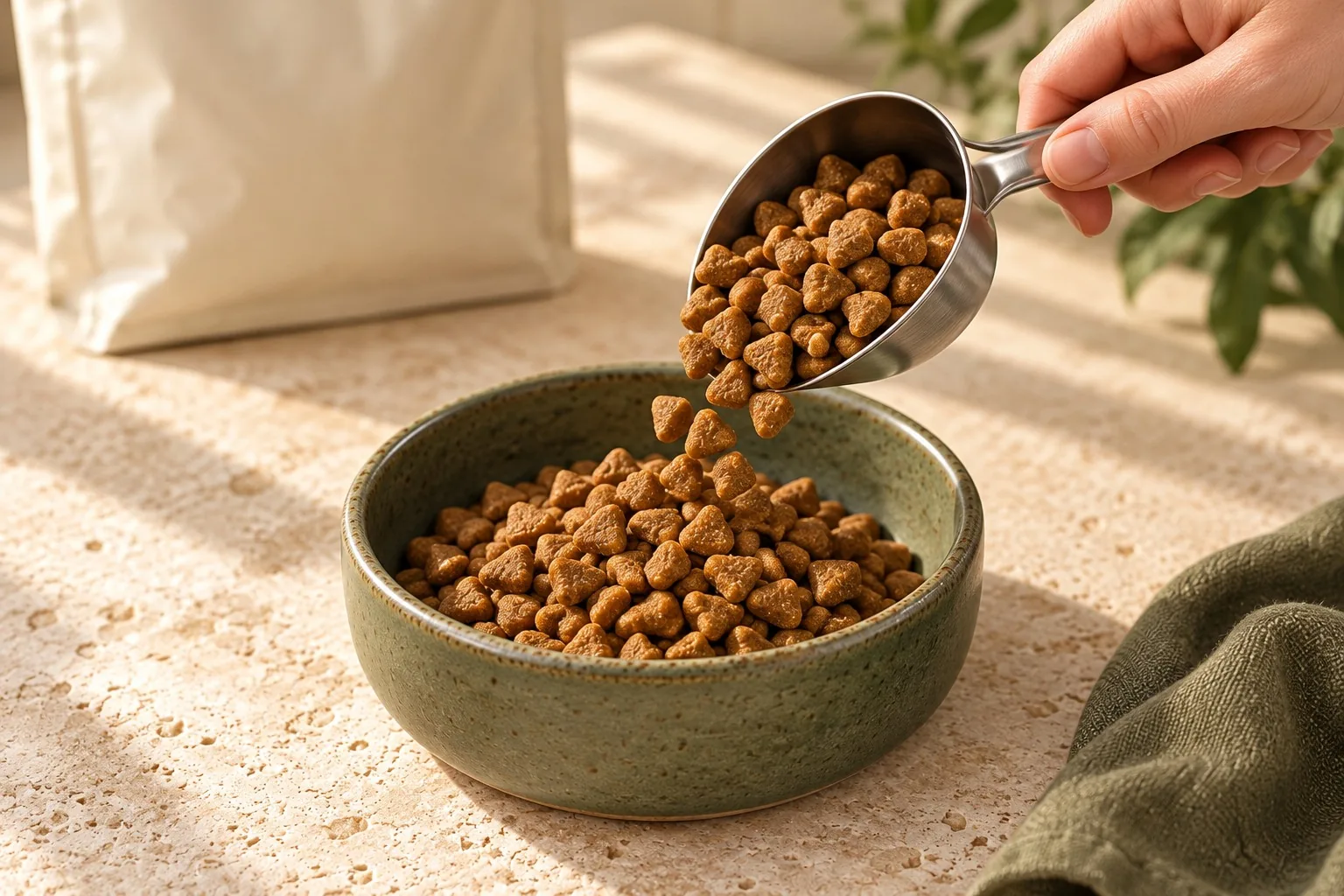
Common Types of Functional Pet Food
We find it more useful to describe functional pet food by what it’s intended to support than by the shape of the food. Kibble, a pouch or a topper can all carry a functional message. None of those formats establishes the benefit by itself.
These four purposes give you a starting point for a product discussion:
| Functional purpose | Common formulation approach | What matters in the finished food |
|---|---|---|
| Digestive support | A chosen fiber blend; in some products, prebiotics or specific probiotic strains | The whole recipe’s digestibility, stool response and the amount actually eaten |
| Skin and coat support | Protein and a planned fatty-acid profile, sometimes with added oils | The nutrient balance and evidence for the particular food or addition |
| Joint and mobility support | Defined amounts of omega-3 fatty acids such as EPA and DHA; some recipes use other joint-focused ingredients | The studied amounts, intended pet and outcome behind the claim |
| Weight support | A planned calorie density with protein and fiber adjusted for the feeding goal | Calories per daily portion and nutrition at that portion size |
For digestive products, “with fiber” tells you less than it seems to. Different fibers affect the food differently, and increasing the amount isn’t automatically better. A product designed around stool consistency needs a recipe that pets can eat regularly, with a response owners can understand.
Prebiotics and probiotics also aren’t the same thing. ISAPP’s scientific definitions distinguish prebiotics—substances selectively used by microorganisms for a health benefit—from probiotics, which are live microorganisms supplied in adequate amounts for a health benefit. If your proposed food includes a probiotic, the strain and the amount delivered matter. The word “probiotic” alone isn’t a finished formula.
For skin, mobility or weight products, the same principle applies: choose a feeding purpose before choosing a headline ingredient. “Adult dog food with a defined calorie allowance” gives a formulator more to work with than “a healthy food for every dog.” These are development examples, not a claim that one recipe suits every animal.
The purpose tells you what to investigate. The feeding evidence tells you how far the benefit may go.
What Benefits Can Functional Pet Food Offer?
Functional pet food may help support a defined nutritional goal, but the evidence varies by recipe and by outcome. We should be clear about the difference between a change measured in a feeding study and a result an owner can expect from a different product.
For digestive support, you might want a food that a pet tolerates well and that produces consistent stools. The fiber blend needs to fit that aim. A 2024 feeding study in 12 healthy adult dogs compared diets and treats containing different combinations of legume fibers, prebiotics and probiotics. The foods changed gut bacterial communities and the substances they produced. Some combinations also produced more stool and were digested less fully than the control diet. Those findings tell us how the tested recipes affected the gut; they don’t establish a treatment for diarrhea.
If you’re developing that type of food, stool consistency and how well the diet is digested matter alongside the ingredient choice. A change in gut bacteria isn’t the same thing as proof that a pet feels better. And a result from healthy adult beagles doesn’t establish the same result in cats or animals with a digestive disease.
Skin and coat support starts with sound nutrition. The Merck Veterinary Manual’s nutrition guidance explains the dietary role of fatty acids and the differences between canine and feline needs. Adding an oil needs to make sense within the food’s total fat and nutrient profile.
A 16-week study comparing three plant oils in 30 healthy dogs found that some coat scores improved from baseline across the groups. However, the oils didn’t differ in the measured outcomes, and there was no group receiving no oil. The study didn’t show that one oil was a better coat treatment. You can discuss a food’s fatty-acid content plainly without turning an oil name into a promise to fix itchy skin.
Mobility is another area where recipe details matter. In a six-month trial involving 127 dogs with osteoarthritis, a test food with much more fish-oil omega-3 than the comparison food improved owners’ ratings of certain activities, including rising and walking, at particular follow-ups. That finding belongs to the tested food and those dogs.
It isn’t a blanket result for all fish-oil products. A separate 16-week trial in 77 dogs did not find a statistically clear difference between fish oil and placebo in its main pain and movement outcomes. Together, these studies show why we can’t promise mobility results from an ingredient name alone. A dog struggling to walk needs veterinary assessment, not simply a different bag.
For weight support, the food and the portion work together. A study of 42 dogs with obesity compared a high-protein, high-fiber diet with a high-protein diet containing less fiber during a managed weight-loss program. Dogs receiving the higher-fiber diet lost more weight. This wasn’t evidence that they could eat unlimited portions or that every “light” food would have the same effect.
For your product, a stated calorie content and clear feeding amounts help owners use it as intended. A low-fat label by itself doesn’t tell them the total daily calorie intake. Meals, treats and toppers all contribute to that intake.
An ingredient study, a trial of one recipe and evidence for your finished food are different things. If you describe a benefit on your pack, keep it tied to the animals, recipe and serving used in the research. Changing the recipe can change the result.
How We Develop Functional Pet Food at FreshBite
At FreshBite, our prescription and functional pet food range is developed around defined nutritional goals. For a new project, you can discuss an existing formula or a recipe that needs custom development through our OEM/ODM pet food service.
Tell us which pet you’re feeding, the nutritional purpose and the market where you’ll sell it. An adult-dog meal with a digestive-support brief gives us a concrete starting point for the formula and sample discussion. A complementary product needs a different serving plan.
Our development work can cover formula, taste, texture and nutritional composition, with sample review and nutritional or taste testing as part of the project. Those steps help turn your idea into food you can review. They don’t, by themselves, prove a particular health effect; any proposed functional claim needs evidence that fits it.
Give Your Functional Pet Food a Clear Feeding Purpose
The useful question isn’t how many functional ingredients you can fit on the front of a pack. It’s what you’re asking the food to do and how an owner will feed it.
If it’s the pet’s daily meal, explain the intended species, life stage and portion alongside its nutritional purpose. If it’s an add-on, make the serving role clear so owners can account for it within the rest of the diet. That makes your functional pet food easier to understand when someone buys it and when they open it at home.
Keep the promise specific, too. A recipe designed for ordinary digestive support should be described that way. It shouldn’t be presented as a substitute for care when a pet has ongoing diarrhea, pain or another health problem. Those concerns belong with a veterinarian.
If you’re planning a functional pet food line, talk with our pet food team about the pet, feeding role and nutritional goal you have in mind. We can use that starting point to discuss the formula and samples with you.
Functional Pet Food FAQs
Is functional pet food the same as prescription food?
No. Here, functional pet food means food aimed at a defined nutritional or wellness goal in regular feeding. A therapeutic or prescription diet is intended for the nutritional management of a particular health condition and may need veterinary direction. The terms and product classifications vary by market. Don’t use a general functional claim to suggest that a food treats a diagnosed disease.
Can functional pet food replace a complete daily diet?
Only if the product is itself intended and nutritionally suitable to be the pet’s complete daily food for the stated species and life stage. A functional treat, topper or supplement has a different role. Read the nutritional-adequacy statement and feeding directions; “functional” on the front doesn’t tell you whether the product can supply the whole daily diet.
Does a functional ingredient guarantee a benefit?
No. You need to consider the ingredient’s form, amount, feeding directions and the rest of the recipe, as well as evidence in the intended species. A positive study on one food doesn’t establish the same effect in every product that shares an ingredient. A clear product description explains the intended support without promising the same result for every dog or cat.