
Pet food quality control involves checking ingredients, production, and finished packs against the food’s agreed requirements. If you’re developing a product for your brand, it starts before the mixer runs and continues after you seal the bag or pouch.
A neat-looking pack can’t tell you whether the recipe used the correct premix. And an acceptable food sample doesn’t tell you whether the shipment contains the right labels and lots. Those questions belong at different points in production.
We’ll follow a batch through five connected stages, from receiving materials to loading the shipment. The exact checks depend on the recipe, process, packaging, and destination market. Here we’re explaining the general manufacturing workflow; your product determines the details.
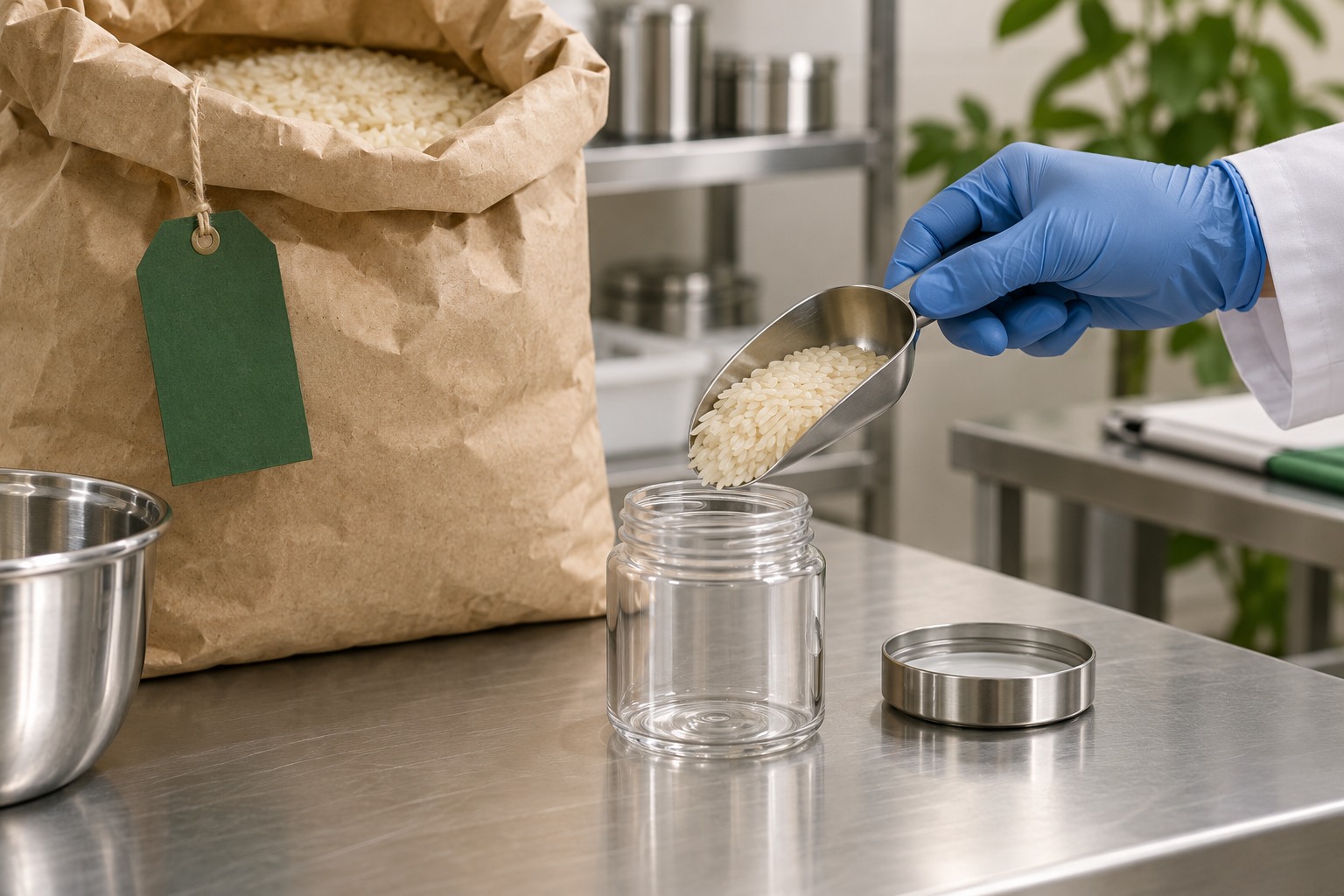
1. Pet Food Quality Control at Raw Material Intake
At the receiving area, confirm the ingredient matches the order and is suitable for production. A supplier name on a delivery note doesn’t settle either question. The ingredient identity, incoming lot, and delivery condition need to match the purchasing specification.
Take a grain delivery. Torn sacks or damp patches give the team a reason to stop and examine the affected material. For a chilled ingredient, arrival condition and temperature also matter. In the US, the FDA’s animal-food manufacturing guidance describes receiving examinations that can include document review, visual inspection, relevant sampling and testing, and checks on transport conditions. It doesn’t prescribe one identical examination for every ingredient.
Sampling needs a purpose. You choose what to investigate based on the material’s known risks and acceptance requirements; a visual check can’t answer every contamination question. A sample also needs the incoming lot identity attached to it, so the result belongs to the material being assessed.
If a lot has unresolved findings, it needs a clear hold status so it isn’t mistaken for usable stock. Once accepted, its identity goes with it into storage and the production record. That gives the weighing team a specific material to use, rather than simply “the next sack.”
2. Pet Food Quality Control During Formulation and Weighing
Accepted ingredients still need to become the right recipe. You want production to follow the approved formula version, with the ingredient quantities and batch size defined. Adult-dog food and kitten food may share ingredient names, but that doesn’t make their formulas interchangeable.
At weighing, the ingredient code, lot, and amount must match that formula. If you replace a premix with a different concentration and keep the old addition amount, it can change what reaches the finished food. A substitute therefore needs a formula review, rather than a quick swap at the mixer.
Small additions deserve as much attention as the bulk ingredients. The FDA’s animal-food hazard guidance identifies incorrect micronutrient mixing and ingredient addition as possible causes of nutrient deficiencies or toxicities. It gives excess vitamin D in dog food as one example.
Weighing equipment also needs to suit the amount being measured. A scale used for a bulk sack isn’t automatically suitable for a small premix addition. FEDIAF’s safe pet food manufacturing guide, written for European production and imports into the EU, addresses measuring equipment calibration and uniform mixing. By uniform, we mean that the addition is distributed through the mix, rather than concentrated in one part of it.
The batch record carries forward the actual ingredient lots and weighed quantities. If a weighing discrepancy appears, the team can establish what was added before allowing that mixture to continue through production.
3. Pet Food Quality Control Through Processing and Hygiene
Processing turns the mixture into the food you’ve specified. If you change that route, you need to review its controls too. Extrusion, oven baking, and processing a sealed wet-food pack don’t use one shared set of operating conditions.
Our guide to making extruded kibble covers mixing, cooking, shaping, drying, and finishing. You check the relevant settings and measurements against the defined process. If the dryer runs outside the specified conditions, you need to identify the affected production even if the pieces look normal.
When heat controls a safety hazard, a temperature reading alone isn’t the whole answer. The process needs evidence that it can control the identified hazard under its intended conditions. For facilities subject to the applicable US preventive-control requirements, 21 CFR 507.47 on validation addresses that scientific and technical support. Validation establishes whether a control can work; monitoring records whether the defined conditions were followed during production.
Hygiene continues around that process. Cooked food can encounter equipment, conveyors, and people before packaging. Keeping raw-material handling from contaminating later operations matters, as does maintaining equipment so worn parts don’t become foreign material in the food. The US plant-operations requirements cover protection against contamination during steps including mixing, drying, cooling, and filling.
If a process condition moves outside its defined limits, identify and assess the affected food. Simply returning the machine to its normal setting doesn’t explain what happened to the food already produced. That assessment carries into the finished-product release decision.
4. Pet Food Quality Control at Packaging and Batch Release
At this stage, the team brings the finished food, production records and packaging checks together. The question is whether the batch meets its release requirements, including any findings carried forward from earlier stages.
Finished-product checks may cover nutritional composition, moisture, physical characteristics or relevant contaminants. You need a defined purpose, sampling method, and acceptance criteria for each check. For example, checking a kibble’s size tells you about its physical specification; it doesn’t establish that its nutrient composition is correct.
The same care applies to microbiological testing. The FDA’s explanation of preventive controls for animal food states that product testing and environmental monitoring are required only as appropriate to the food, facility, and preventive-control system. No universal legal rule requires every pet food batch to undergo the same tests. A test result answers the question that the sample and method were designed to investigate.
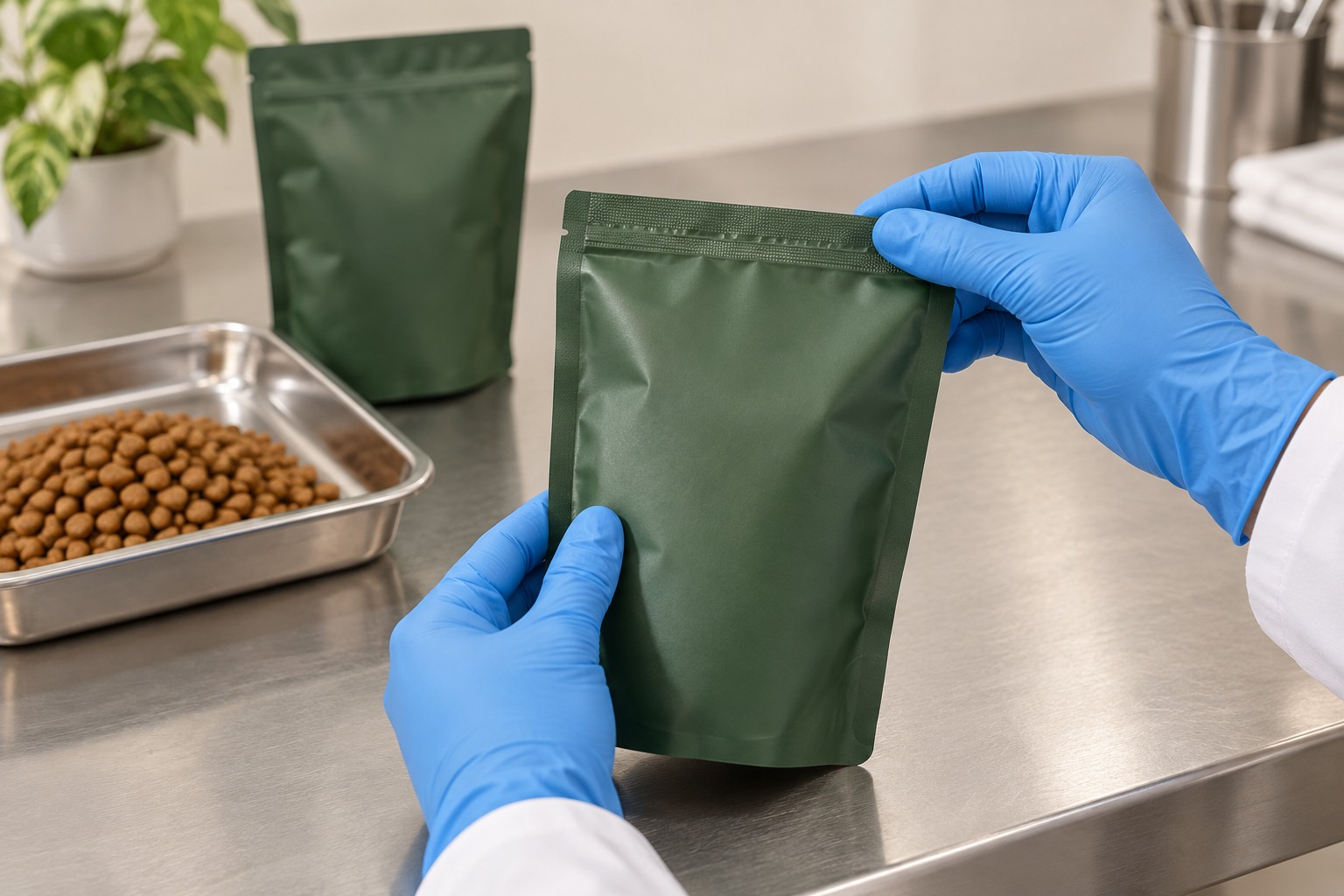
Packaging has its own checks. The fill quantity, closure, pack condition, and printed information all matter. A seal area contaminated with food needs attention even when the pouch artwork looks correct. The label must also match the food inside. For the US market, FDA animal-food labeling requirements include product identification, net quantity, the responsible business, and ingredient listing; state requirements also apply.
Now consider a correct recipe packed in a bag printed for a different flavor. The food may meet its production specification, but the pack is still wrong. Hold the affected product while the team determines the extent of the mix-up and the appropriate correction.
Before release, resolve required results, process findings, and pack checks before the batch moves into released stock.
5. Pet Food Quality Control in Storage, Shipment and Traceability
Released food still needs protection. Your storage conditions must follow the product specification: ambient and refrigerated products have different needs. Damaged packs, condensation, pests, or chemical exposure can cause problems after production.
Stock rotation also belongs here. The warehouse needs to use the product’s dates and agreed shelf life when choosing stock for dispatch, rather than picking whichever pallet is nearest the door. FEDIAF’s guide covers orderly stock use within shelf life, including first-in, first-out or first-expiry, first-out approaches.
Before loading, you need suitable containers and transport conditions for the shipment. For covered US operations, 21 CFR 507.27 on holding and distribution requires protection against contamination and deterioration. It also requires examination of shipping containers and bulk vehicles when the facility transports the food itself or arranges its transport.
Traceability connects the physical shipment to the production history. The lot code on the retail pack needs a usable link to its batch, ingredient sources, and distribution records. The FDA’s explanation of receipt and distribution records covers applicable US requirements, including exemptions, such as ingredient-source information for finished lots.
Suppose one incoming ingredient lot was used in three production runs. If a concern about that ingredient arises later, the records must identify all three runs and where their finished products went. Knowing the supplier alone wouldn’t answer that question. The information started at intake; shipment is where the customer and quantity complete that history.
Connect Pet Food Quality Control to Your FreshBite Project
The five stages work together: accepted ingredients enter the approved recipe, production follows its defined controls, the finished batch receives a release decision, and shipment preserves the product and its history.
At FreshBite, our OEM/ODM pet food service covers formula development, samples, taste or nutritional testing, packaging and label review, quality inspection, and export delivery. We can discuss an existing formula, produce your recipe, or explore custom development.
Tell us the food you want to make, its intended pet, pack, and destination market. Those details help us plan samples for the recipe and pack you have in mind. Discuss your pet food project with our team so we can consider the recipe, final specifications, and delivery requirements from the start.
Pet Food Quality Control FAQs
Is pet food quality control only finished-product testing?
No. Finished-product testing addresses selected questions about the sampled food. Quality control also follows ingredient identity, weighing, processing, hygiene, packaging, and shipment conditions. A wrong ingredient addition or incorrect label needs attention at the stage where it occurs; a final laboratory result doesn’t replace those checks.
Do all pet food formats use the same quality controls?
No. The recipe, processing route, packaging, and storage conditions change what needs to be controlled. A dry-food bag and a sealed wet-food pack have different production conditions and package checks. The intended animal and destination market matter too. The five-stage sequence is useful, but each product needs its own defined requirements.
Why do lot codes matter after pet food shipment?
They connect a particular pack to its production and distribution history. If a complaint or ingredient concern appears, that link helps identify the affected food and where it went. The code needs supporting records; printing a number on a bag alone doesn’t create traceability.